The Ultimate Guide to Your Brand Profile Picture: From First Glance to Lasting Impression
Updated: Aug 9, 2025
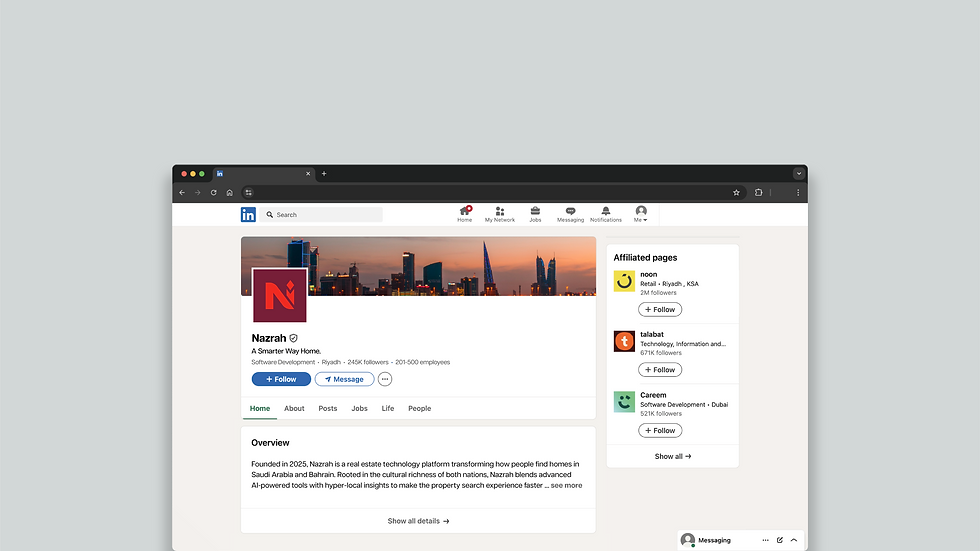
In the vast, scrolling expanse of the digital world, your brand has one tiny circle to make its first impression.
Your brand profile picture.
It’s the small, often overlooked image that sits next to every comment you leave, every post you share, and every message you send. It is, without a doubt, the single most viewed piece of your entire visual identity. Yet for many businesses, it’s an afterthought - a quickly cropped logo or a poorly lit headshot.
This is a massive strategic error. Your profile picture is not just a placeholder; it is the face of your brand. It’s a powerful tool for building recognition, communicating your personality, and establishing immediate credibility. A great brand profile image is a silent ambassador that works for you 24/7, turning a fleeting glance into a moment of connection.
The current top articles on this topic will give you some basic tips, but they only scratch the surface. To truly leverage the power of this critical asset, you need a deeper, more strategic approach. This definitive guide will take you beyond the basics. We will deconstruct the different types of profile pictures, provide a strategic framework for choosing the right one for your brand, and walk you through the design principles that separate an amateur image from an iconic one.
Part 1: The Strategic Importance - Why Your Tiny Circle Matters More Than You Think
Before we dive into the "how," we must first understand the "why." Your profile picture is a miniature powerhouse of brand communication. Its strategic importance can be broken down into three key functions.
1. It is the Cornerstone of Brand Recognition
The human brain is wired to recognise faces and simple symbols with incredible speed. On a crowded social media feed or in a cluttered email inbox, your profile picture is the primary visual cue that allows a user to instantly identify you.
Consistent use of a clear, strong brand profile picture across all platforms (LinkedIn, Instagram, X, Facebook, email signatures) creates a powerful pattern of recognition. This repeated exposure builds familiarity, and familiarity is the bedrock of trust. When a user sees your consistent image time and time again, they begin to feel like they know you, which dramatically increases the likelihood they will engage with your content.
2. It is an Instant Communicator of Brand Personality
Your profile picture sets the tone for every interaction. It’s the first signal of your brand’s personality.
A crisp, geometric logomark might signal a modern, efficient tech company.
A warm, professional headshot of a founder can communicate a personal, trustworthy service-based business.
A playful illustration or mascot can signal a creative, fun, and approachable brand.
This instant communication of personality acts as a filter. It helps to attract your ideal audience while subtly indicating to those who are not a good fit that your brand may not be for them.
3. It is a Key Driver of Credibility and Trust
A low-quality, pixelated, or poorly designed profile picture is an immediate red flag. It signals a lack of attention to detail and professionalism, which can cause a user to question the quality of your products or services.
Conversely, a high-quality, professionally designed profile picture is an instant signal of credibility. It shows that you are a serious business that invests in its own brand, which gives potential clients the confidence to invest in you.
Part 2: Choosing Your Archetype - The Four Types of Brand Profile Pictures
There is no one-size-fits-all solution for a brand profile picture. The right choice depends on your industry, your brand strategy, and the platform you are using. There are four main archetypes to choose from.
1. The Logomark / Brandmark
This is a profile picture that uses the isolated icon or symbol from your logo.
Examples: Apple (the apple icon), Nike (the swoosh), Target (the bullseye).
Best For: Brands with a simple, highly recognisable, and graphically strong symbol. This is often the best choice for established companies or brands that want to project a bold, modern image.
Advantages: It's clean, scalable, and works incredibly well in the tiny circular format of a profile picture. It builds a powerful, instant association with your brand mark.
Considerations: This only works if your logomark is strong enough to be instantly recognisable on its own, without the company name next to it.
2. The Lettermark / Monogram
This uses the initials of your business name, often in a stylised way.
Examples: HBO (Home Box Office), YSL (Yves Saint Laurent), GE (General Electric).
Best For: Businesses with long names or for brands that want to create a sophisticated, classic, or high-end feel. A skilled brand designer can turn a simple monogram into an elegant and memorable mark.
Advantages: It's a great way to simplify a complex name while still being directly tied to it. It can feel very established and authoritative.
Considerations: The design must be exceptionally clear and legible to avoid looking like a generic initial.
3. The Founder / Personal Brand Portrait
This uses a professional headshot of the founder or a key team member.
Examples: Entrepreneurs, consultants, coaches, and many service-based business owners.
Best For: Personal brands and service-based businesses where the primary driver of trust is a direct relationship with a person. This includes consultants, real estate agents, artists, and many creative agency founders.
Advantages: It is the most powerful way to build a human connection and foster trust. People are naturally wired to connect with faces. A warm, professional portrait can make your brand feel instantly more approachable and authentic.
Considerations: The photo must be of professional quality. A poorly lit selfie will do more harm than good. It can also make it harder for the business to scale beyond the founder in the future.
4. The Wordmark (Use with Caution)
This uses the full name of your company.
Examples: Coca-Cola, Google, Amazon.
Best For: It is generally not recommended for a profile picture, but can work for brands with a very short, bold, and highly legible name.
Advantages: It directly displays your full brand name.
Considerations: Most brand names are too long to be legible when shrunk down to the size of a profile picture. The text becomes a tiny, unreadable blur. This should only be used if your name is very short (e.g., 3-4 letters) and the typography is extremely clear.
Part 3: The Design Blueprint - Principles for a Perfect Profile Picture
Whether you choose a logomark or a portrait, a successful brand profile image must adhere to a set of key design principles.
1. Simplicity is King
Your profile picture will most often be viewed as a tiny thumbnail. Any intricate details, fine lines, or subtle gradients will be completely lost. The design must be bold, simple, and instantly comprehensible. Before finalising your design, shrink it down to 200x200 pixels and then 50x50 pixels. Is it still clear? If not, it’s too complex.
2. High Contrast for High Impact
Your profile picture will be viewed on a variety of backgrounds - the white of a LinkedIn page, the dark mode of an Instagram feed, or overlaid on a colourful Instagram Story. Your design must have a high level of contrast to ensure it is always visible. A light grey logo on a white background, for example, will disappear. Bold, clear colour combinations work best.
3. Master the Circle
Almost every social media platform now uses a circular frame for profile pictures. You must design with this in mind.
The "Safe Zone": Ensure the most critical elements of your logo or your face are well within the centre of the image, away from the edges that will be cropped off. A square logo with important details in the corners will be ruined by a circular crop.
Use the Circle Creatively: A great design can use the circular frame as a creative element. You can place your logomark inside a solid-coloured circle to ensure high contrast, or a portrait can be framed in a way that feels natural within the circle.
4. Consistency is Non-Negotiable
You must use the exact same brand profile picture across every single one of your online touchpoints.
All Social Media: LinkedIn, Instagram, X, Facebook, TikTok, Pinterest.
Email Signatures: This is a crucial and often forgotten touchpoint.
Communication Tools: Slack, Discord, etc.
Website & App: Your user avatars and favicons should align.
This unwavering consistency is what builds the rapid brand recognition that is so critical in the digital age.
Part 4: Technical Excellence - The Final Polish
A great design can be ruined by poor technical execution. Here’s how to ensure your profile picture is always sharp and professional.
Start with a High-Resolution File: Always start with a large, high-resolution source file (at least 1080x1080 pixels). This will ensure that when platforms compress your image, it still looks crisp.
Export in the Right Format: For most logos and graphics, a PNG file is the best choice, as it supports a transparent background. For a photograph, a high-quality JPG is ideal.
Know the Correct Dimensions: While you should upload a high-resolution file, be aware of the recommended dimensions for each platform to ensure optimal display. (e.g., Instagram: 320x320 pixels, LinkedIn: 400x400 pixels).
Conclusion: Your Smallest Asset is Your Biggest Opportunity
In a world of complex marketing strategies and multi-channel campaigns, it's easy to overlook the small details. But your brand profile picture is not a small detail. It is the face of your brand, the anchor of your visual identity, and the first handshake you have with millions of potential customers.
By moving beyond a simple file upload and embracing a strategic approach - by choosing the right archetype, adhering to key design principles, and ensuring technical excellence - you can transform this tiny circle into a powerful tool for building trust, fostering recognition, and driving business growth.
Your brand's first impression is too important to be an afterthought. Make it count.
Ready to create a brand identity where every detail, from your profile picture to your website, is designed for impact? Explore our branding packages for small businesses and let's build a brand that stands out.


